中央财经大学人权与经济研究中心于2026年5月获批第四批国家人权教育与培训基地(培育)。
中心以研究阐释习近平总书记关于尊重和保障人权重要论述、习近平法治思想、习近平经济思想为根本任务,发挥学校特色和学科优势,创新采用“学院主建、学科主研”模式,以研究主题为指引,以学者为工作主体,打通经管法等不同学科,致力于系统研究人权保障与经济发展间内在关联、互动机制与实践路径,推动二者形成理论与实践层面的深度融合与良性互动,使增长服务于人的尊严与全面发展,促进实现有权利的经济繁荣和有根基的社会公正,为治国理政提供智力支持。
中心以法学院为建设主体,协同相关学院及研究机构,依托学校的法学和经济学、管理学等多学科优势,开展人权与经济方面的跨学科的前沿理论与政策研究,开展相关人权教育工作。目前已经凝练形成习近平法治思想、习近平经济思想、财税制度、国际经贸、国际金融、国际法治、国际政治与人权等跨学科团队。这些团队打通学校经管法三大主体学科,充分发挥不同学科专业的积极性、主动性,强化不同学院及研究机构之间的交流互动,提高合作科研攻关的效能,突出研究主题和成果的应用性、适用性,具有鲜明的交叉融合特点。
中心主任由中央财经大学校长马海涛教授担任,中心执行主任由法学院院长于文豪教授担任。中心实行主任负责制,在主任领导下,执行主任组织开展日常工作。中心建立联席会议机制,成员包括学校有关部门和学院及研究机构的负责人。
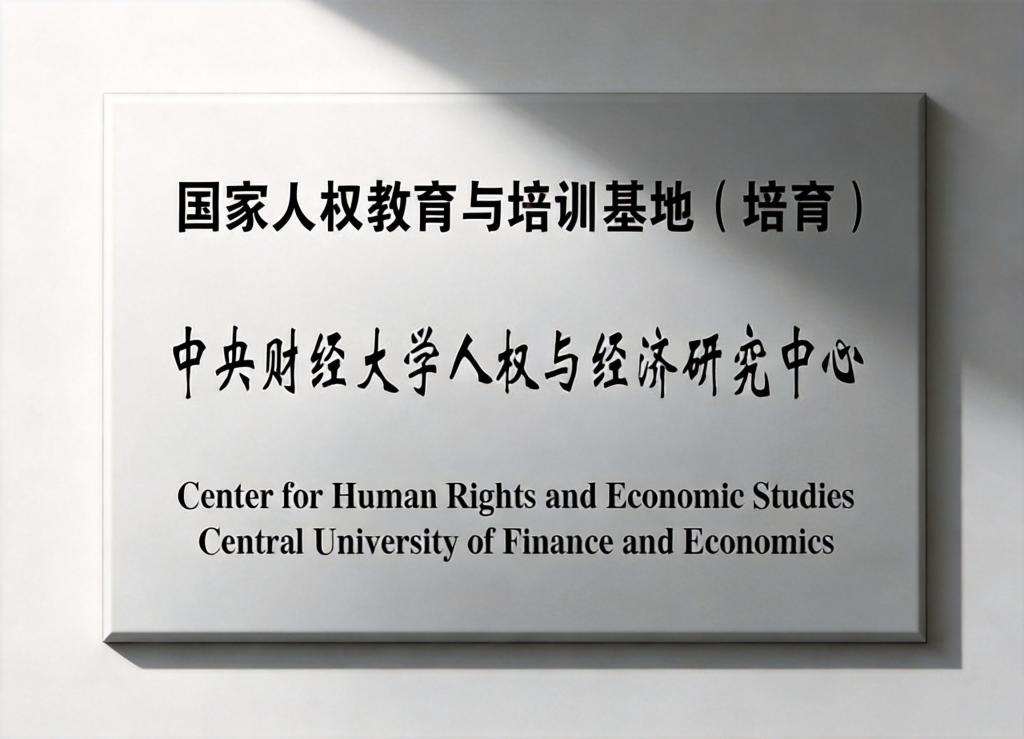
未来一段时期,中心将围绕以下方面加强基地建设:
一是紧紧围绕党和国家工作大局,充分发挥人权研究机构的智库功能。精准对接以中国式现代化全面推进中华民族伟大复兴的战略需求,围绕生存权发展权、经济社会权利保障、数字人权、全球人权治理等重大议题,深耕基础理论与应用对策研究,为推动人权事业全面发展提供理论支撑和决策参考,在构建中国人权话语体系和服务国际人权对话中发挥智库功能。
二是紧密结合学校和学科特色,打造具有鲜明财经辨识度的人权研究品牌。依托法学和经济学、管理学三大主体学科的优势,聚焦经济社会权利、财政经济政策的人权效应、金融“五篇大文章”与人权保障、营商环境与人权保障等交叉领域,打造具有财经辨识度的人权研究特色方向,走“人权+经济”的建设路径。
三是坚持问题导向与理论创新并重,着力产出高水平研究成果。坚持问题导向与理论创新并重,围绕宏观经济治理的人权维度、有效市场与有为政府的权利保障机制等前沿议题,产出具有理论锐度和实践影响力的高质量成果,积极在权威期刊发表文章、承担国家级课题、参与国际学术对话,提升中心的学术声誉和政策影响力。
地址:北京市海淀区学院南路39号
电话:(010)62288672
邮箱:fxybgs@cufe.edu.cn

欢迎关注中心微信公众号
Center for Human Rights and Economic Studies, Central University of Finance and Economics
Approved in May 2026 as part of the fourth batch of National Base for Human Rights Education and Training (Cultivation), the Center for Human Rights and Economic Studies at Central University of Finance and Economics (CUFE) has as its core mission the research and interpretation of General Secretary Xi Jinping's major statements on respecting and safeguarding human rights, as well as his Thought on the Rule of Law and Economic Thought.
Drawing on the university's unique institutional features and disciplinary strengths, the Center adopts an innovative model of"School-driven Development, Discipline-led Research". Guided by research themes and centered on academic scholars, it integrates the fields of Economics, Management, and Law. The Center is committed to systematically examining the intrinsic links, interaction mechanisms, and practical pathways between human rights protection and economic development. It seeks to advance their in-depth integration and positive interaction in both theory and practice, ensuring that economic growth serves human dignity and holistic development. This approach promotes prosperity rooted in human rights and substantive social justice, while providing intellectual support for national governance.
Anchored in the Law School,the Center operatesin coordination withrelevant faculties and research institutes. Leveraging the university's multidisciplinary strengths in Law, Economics, and Management, it conducts cutting-edge interdisciplinary theoretical and policy research on human rights and economic issues, and delivers related human rights education programs. The Center has assembled interdisciplinary research teams focused on: Xi Jinping's Thought on the Rule of Law, Xi Jinping's Economic Thought, Public Finance and Taxation, International Trade and Economics, International Finance, International Rule of Law, and International Politics and Human Rights. These teams span the university's three core disciplinary pillars, fully mobilizing the initiative of diverse disciplines, fostering exchanges across faculties and institutes, improving collaborative research efficiency, and highlighting the practical relevance and application of research findings–all of which reflect its distinctive interdisciplinary character.
The Center is headed by the University President Professor Ma Haitao, with the Dean of the Law School Professor Yu Wenhao serving as Executive Director. Under the Director Accountability System, the Director provides overall leadership, while the Executive Director manages day-to-day affairs. The Center has also established a joint conference mechanism comprising heads of relevant university departments, faculties, and research institutes.
For the period ahead, the Center will advance the development of the Base in three key areas:
1. Leveraging Its Think Tank Role: Closely aligned with the Party and the country's overall priorities, the Center will fully exercise its think tank functions to meet the strategic needs of advancing the great rejuvenation of the Chinese nation through Chinese modernization. Focusing on critical issues such as the rights to subsistence and development, protection of economic and social rights, digital human rights, and global human rights governance, it will conduct in-depth research on basic theories and applied strategies. The Center aims to provide theoretical support and policy recommendations for advancing the comprehensive development of China's human rights cause, contribute to developing China's human rights discourse, and support international human rights dialogue.
2. Building a Distinctive Institutional Brand: Rooted in the university's disciplinary strengths, the Center will establish a unique human rights research brand with a clearfinancial and economic identity. Drawing on its core strengths in Law, Economics, and Management, it will focus on interdisciplinary areas including economic and social rights, the human rights implications of fiscal and economic policies,the"Five Priority Areas of Finance"and human rights protection, and business environment and human rights safeguards. It will develop distinct research agendas under the framework of "Human Rights + Economy".
3. Pursuing High-Impact Research Outcomes: Adhering to a problem-driven approach and prioritizing theoretical innovation, the Center is committed to producing high-level research. Focusing on cutting-edge issues such as the human rights dimensions of macroeconomic governance and rights protection mechanisms for an efficient market and a capable government, it will generate rigorous, influential findings. The Center will actively publish in leading academic journals, undertake national research projects, and engage in international scholarly exchanges to enhance its academic standing and policy impact.
Address: No.39 Xueyuan South Road, Haidian District, Beijing
Tel:(010) 6228 8672
Email:fxybgs@cufe.edu.cn